
In my experience, the students who get the top grades aren't always the strongest mathematicians. They're the ones who have practised exam technique, which is a separate skill from knowing the maths.
- Your grades don't reflect how well you know the maths
- The test comes back full of silly mistakes
- You "get it" in lessons, but the marks don't come
If so, it's usually not the maths. It's that exam technique hasn't had enough practice time of its own. This guide covers the four habits that close the gap.
Practise under exam conditions
So the clock and the pressure feel normal on the day.
If the exam is the only time you work against the clock, it shows: you run short of time, nerves take over, and careless slips cost you method marks you would normally pick up.
So make a practice paper feel like the real thing, often enough that the real thing feels like practice.
A 100-mark paper gets about 2 hours. Allow a little more for the long questions at the end.
Set it up like the real thing
- Write on a printed exam paper, not lined paper. Fitting your answer in the space is part of the practice.
- Phone in another room, every other tab closed.
- Answer from memory. No notes.
- Write full solutions, not rough working to copy up later.
- Check your own work before you open the mark scheme.
The pressure never disappears completely. But each time you practise under it, it gets easier to manage.
If you run out of space
How much room you get depends on the board, which is why practising on the real paper matters. On AQA papers you can run out of space even when your working is perfect.
When it happens, use the extra paper they provide. The risk is that the examiner never finds it, so signpost it at both ends:
Communicate clearly
So the examiner can find every method mark.
Maths isn't only about getting the right answer. Examiners are human, and they don't have long to search through a disorganised solution. Here is one question, answered by two students who both knew how to do it.
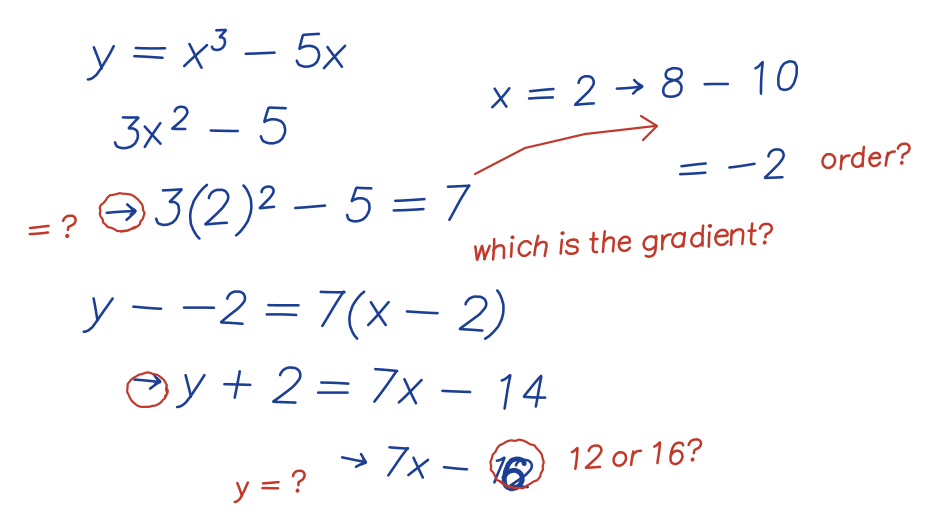
Knew the method. Made the examiner hunt for it.Every red note is a mark the examiner has to decide whether to give.
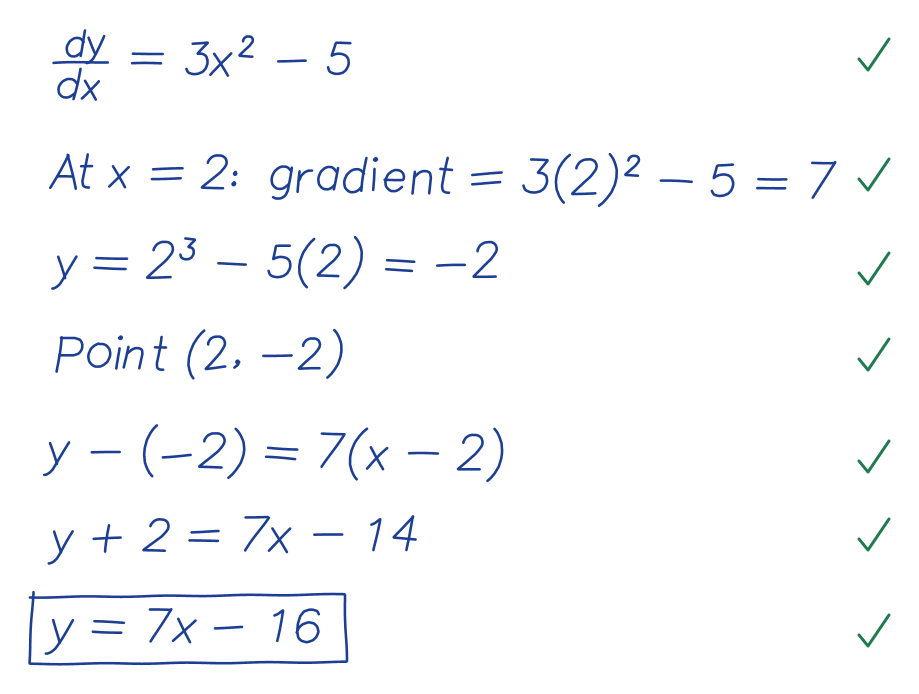
Same maths. Every mark easy to find.Labelled, one step per line, answer boxed.
Nothing Student B did is clever. It's a handful of habits, and every one of them can be practised.
Clear working can earn most of the marks, even when the final answer is wrong.
Reduce careless mistakes
By checking every time you practise, not just in the exam.
In my experience, careless mistakes are the most common reason students drop marks. Everyone makes them. Strong students catch them, because checking is a habit they built in practice.
If you only try to check when you're in the exam, you'll forget to do most of it.
Know your calculator
A calculator is a fast way to check an answer, but only if you're fluent with it. If it doesn't come naturally, you won't use it under pressure. Practise these until they're automatic:
Key names vary between models.
Reflect on your mistakes
So the ones you make in practice stay in practice.
Marking tells you what went wrong. Reflecting tells you why, and that's the part that stops it happening again.
- AttemptA set of questions, under exam conditions
- CheckYour own work, before the mark scheme
- Mark strictlyMethod mark by method mark. Write the score down
- Find the whyA full worked solution, for the method and the setting out
- Retry laterFrom your list of the ones you got wrong
For slips that keep coming back, keep a log. Every time one comes back, add a mark next to it. Reading it before every exam puts your repeat offenders at the front of your mind.
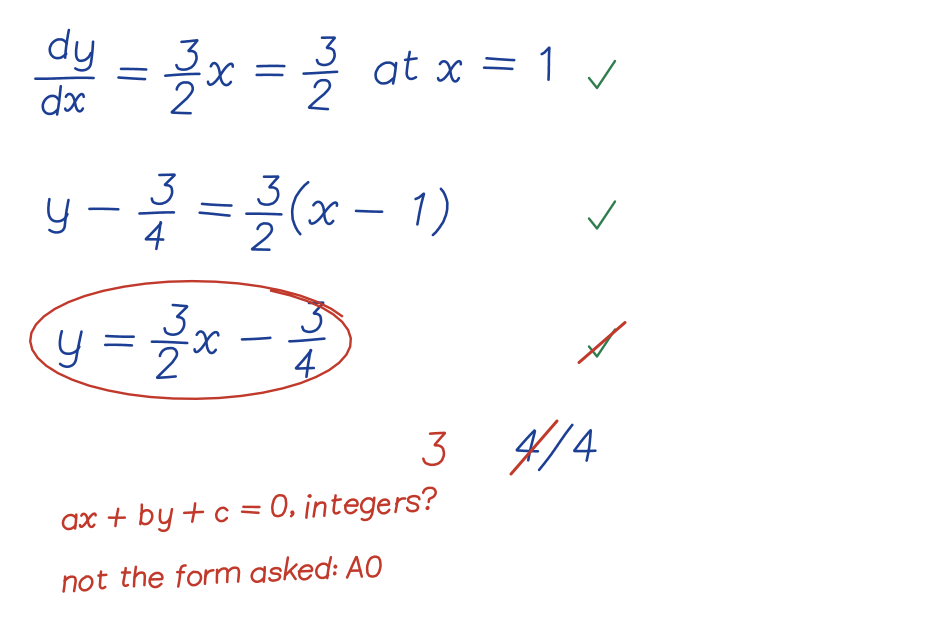
An example page. Yours will have your own.
If the mistake is in the idea rather than the arithmetic, the mark scheme is sometimes enough to see it. If it isn't, ask for help sooner rather than later, and annotate your correction so you can see later what you were thinking.
Pulling it together
Exam technique builds up over months, not the night before, and the four habits feed each other. Timed practice builds the pace that leaves time to check. Clear working is easier to check. Checking means fewer errors reach the examiner, and reflecting stops the same ones coming back.
Work on all four through the course, and the exam will feel familiar when you get there.
Got a question this didn't answer?
Ask me directly and I'll reply by email. The questions students ask most are how these guides get written.

Written by
Andy Parker, Lead Tutor
I run A Level Maths Academy and The A Level Maths Tutor, and teach the course every week. These guides come from the questions students actually ask me, usually more than once. More about me.
Live lessons
Want this taught, not just read?
Premium membership adds live online lessons through the course, recorded so you can catch up, with predicted papers to practise on. A free account gets you past papers with their mark schemes, and exam questions by topic.
See what membership includesRead next
When Should You Start A Level Maths Past Papers? (And Will You Run Out?)
Past papers are the best practice there is, and there are more of them than you might think. When to start them, which order to do them in, and how to mark them like an examiner.
Edexcel Maths: "You Must Show All Stages of Your Working"
Edexcel uses two versions of this instruction and they differ by one word. If you misread which one you've got, a correct answer can score nothing.
OCR and MEI Maths: What "You Must Show Detailed Reasoning" Means
On a detailed reasoning question the right answer on its own can score nothing. This is what OCR and MEI mark schemes look for, and the habit that tends to lose the most marks.